
Why have my diamond cut wheels gone milky — and can it be fixed?
Those white, cloudy patches are corrosion under the lacquer. Here's why it happens, why it spreads, and the proper fix.
By the Infinity Wheelz team · Updated 18 October 2026 · 3 min read
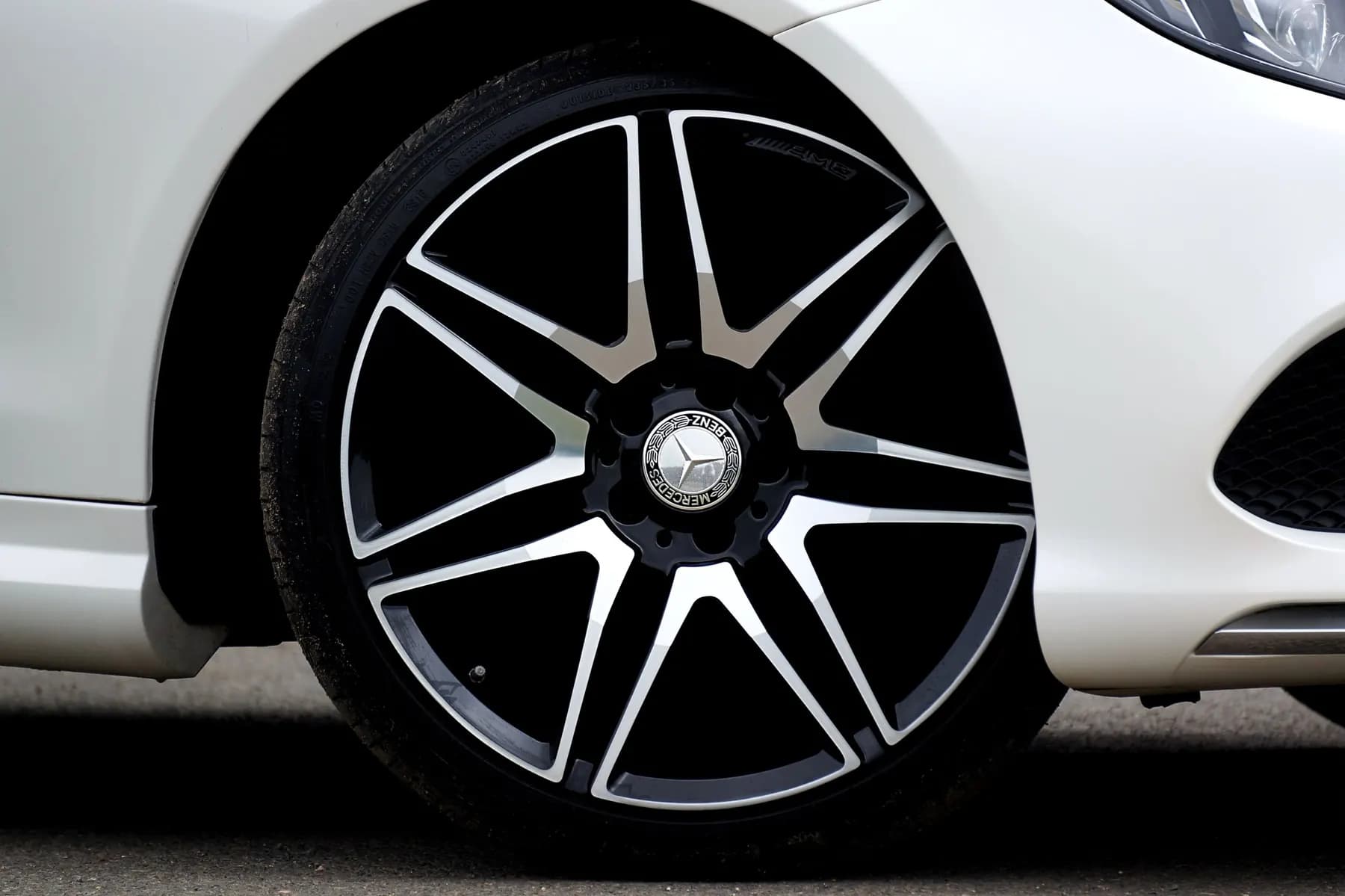
If your diamond cut alloys have developed white, milky or cloudy patches, usually starting at the rim edge or around a small chip, that is corrosion of the bare aluminium underneath the clear lacquer. It cannot be polished out, but it can be fixed properly by re-cutting the face on a CNC lathe.
Why it happens
A diamond cut face is bare, machined aluminium protected only by a thin clear lacquer. Aluminium oxidises as soon as it meets moisture, and the oxide is white. All it takes is one stone chip, one kerb scuff or a tiny gap at the edge of the lacquer, and water gets in. Road salt makes it worse. Once it starts, the corrosion spreads under the lacquer like a bruise, which is why a small mark at the edge becomes a cloudy spoke within months.
Why it is so common
- The lacquer is thin by design, so the machined lines stay visible.
- Pressure washers at high power can lift the lacquer edge.
- Acidic wheel cleaners attack the lacquer and the alloy.
- British winters: salt, grit and constant damp.
Ready for a free quote?
Send a photo of your wheels from your phone — we quote the same day.
The fix
The only permanent fix is to strip the old lacquer, remove the corroded layer by re-cutting the face on a CNC diamond cutting lathe, and seal it under a fresh clear powder lacquer. The painted pockets are powder coated at the same time. The wheel comes back indistinguishable from new. At our Ipswich workshop that starts at [£95] per wheel.
A wheel can usually be cut two or three times before the face gets too thin — we measure and tell you. If a wheel has reached its limit, a full powder coat in silver or any colour is the alternative.
How to stop it coming back
- Use a pH-neutral wheel cleaner, never an acid-based one.
- Keep the pressure washer at least 30cm from the wheel face.
- Get chips and kerb marks touched in quickly before water gets under the lacquer.
- Consider a ceramic coating on the wheels after refurbishment.
FAQ
Related questions
Can I polish milky patches out?
No. The corrosion is underneath the clear lacquer, so polishing the surface does nothing. The lacquer has to come off and the face re-cut.
Will it spread if I leave it?
Yes. Once moisture is under the lacquer it keeps creeping along the face, so a small patch becomes the whole spoke within a season or two.
[Owner photo]
[Owner's name], Founder & lead technician
[Two lines about the owner — years in the trade, what he's known for, and the car he drives. Builds trust and Google likes a named author.]
More guides